



























Minesweeper
Play Minesweeper, the iconic puzzle game that tests your reasoning skills as you interpret clues and avoid hidden bombs across a grid-based field.
Key Features of Minesweeper
Minesweeper remains one of the most recognizable puzzle games in digital history due to its minimalist design and deep strategic gameplay. Despite its simple appearance, the game offers a surprisingly complex experience built entirely on logic and deduction.
One of the most notable features of Minesweeper is its pure logic-based design. There are no reflexes, power-ups, or action mechanics involved. Every decision depends on interpreting numerical clues, which represent how many mines are hidden around a specific tile. This transforms each board into a unique puzzle that must be solved step by step.
Another defining feature is its procedurally generated gameplay field. Every match creates a new arrangement of mines, ensuring that no two games are ever identical. This randomness significantly increases replay value, as players must continuously adapt their thinking strategies rather than memorize patterns.
Finally, Minesweeper is known for its progressive difficulty structure. Beginner levels introduce simple layouts that help new players understand basic logic, while advanced boards demand multi-layered reasoning and careful risk assessment. This gradual increase in challenge makes the game accessible yet endlessly engaging.
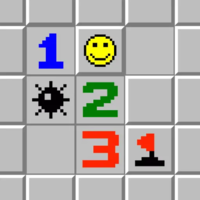
Minesweeper is a brain-training classic
How to Play Minesweeper
Objective and Core Rules
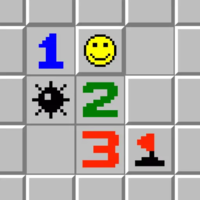
The primary goal in Minesweeper is to reveal all safe tiles without triggering any hidden mines. The board is divided into a grid where some cells contain mines, while others are safe. Each revealed number indicates how many mines are adjacent to that tile, including diagonals.
Players must use these numerical clues to logically deduce which tiles are safe and which should be avoided. Winning requires uncovering all non-mine cells, not necessarily marking every mine.
Controls and Basic Actions
- Left-click to reveal a tile
- Right-click to place a flag on suspected mines
- Click on numbered tiles to analyze surrounding danger zones
- Use logic to expand safe areas automatically when empty tiles are uncovered
The simplicity of the control system allows full focus on reasoning rather than mechanics.
Who Should Play Minesweeper?
Minesweeper appeals to a wide range of players, especially those who enjoy structured thinking and problem-solving. It is ideal for individuals who prefer slow, thoughtful gameplay over fast-paced action.
Students often use Minesweeper as a mental exercise to improve logical reasoning and pattern recognition. Office workers and casual gamers also enjoy it as a quick break activity that stimulates the mind without requiring long play sessions.
Puzzle enthusiasts will find Minesweeper particularly rewarding due to its layered complexity. Each board becomes a unique analytical challenge where every decision carries consequences, making it suitable for players who enjoy careful planning and risk evaluation.
Why Minesweeper Remains Popular?
The lasting popularity of Minesweeper comes from its perfect balance of simplicity and depth. The rules are easy to understand within seconds, yet mastering the game requires long-term practice and sharp analytical thinking.
Its minimalist design removes distractions and focuses entirely on logic, making it a timeless puzzle experience that continues to attract new players even today.
Conclusion
Minesweeper continues to stand as one of the most iconic logic games ever created, offering endless replayability through its unpredictable board design and pure reasoning-based mechanics. Every session feels different, challenging players to think carefully before every move.
For those who enjoy this style of strategic puzzle gameplay, exploring more puzzle experiences on HER TREES can open the door to new challenges and creative problem-solving adventures. Each game brings a different twist on logic and pattern recognition, making the journey both engaging and refreshing.